
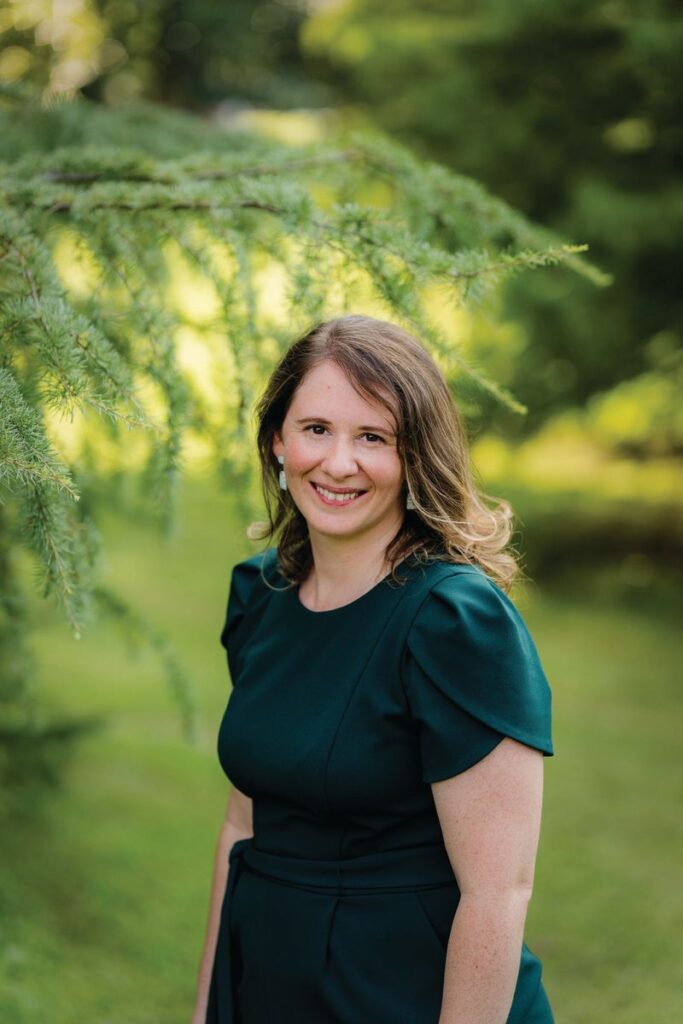
Julia Morrison, 34
Executive Director, Piedmont Grand Opera House and Robins Financial Capitol Theatre Mercer University
What other activities are you involved in where you contribute to your community? Especially mention what you’re most excited about.
I do freelance work for Storytellers Macon as their fine arts director and Macon Magazine as managing editor. I currently serve on the board for Storytellers Macon, Macon Pride, Big Brothers Big Sisters Heart of Georgia, the Friends of Rosa Parks Square, and I’m a new member of Macon Rotary Club. I have previously served on the Macon200 Bicentennial Committee as marketing chair, on the Downtown Macon Community Association as chair, and Macon Little Theatre as secretary.
I’ve been most energized working on several creative collaboration projects that have intersected with my work, like FireStarters Indigenous Film Festival, the From Ocmulgee to Okmulgee gallery show, Heart and Sole Workshop, the Broadway Does Cabaret series, Macon Art eXplosion, Healing a Haunted House, and the Cherry Bomb zine.
Macon Magazine and the Macon200 committee have given me a special opportunity to learn deeply about the context of the city. I came here seven years ago and didn’t know anyone or anything about Macon. I’ve had the chance to ask many Maconites questions and be invited in. I’m excited about what we have done to uncover and highlight our true local history, including parts that are hard to remember. Historic truth telling offers a fresh way of seeing the present while anchoring us to a sense of place, and it is the beginning of healing and reconciliation.
As you look to the future, what are your professional and personal goals?
Professionally, I’m deeply committed to being a good steward of the many heritage cultural spaces that Mercer University has been managing in Downtown Macon. The arts needs community investment to survive — ticket sales alone has never supported the true cost of the arts — and these historic gems are beloved. Mercer has invested in keeping priceless cultural spaces alive as a community service. We are at the forefront of where people can have authentically cool experiences in Macon, and they could have been lost if not for Mercer taking the lead on preserving them.
I want to use audience development work to craft stronger invitations for more people to take part in the arts, as a way to enhance their well-being. Many traditional art centers were made to feel exclusive, so lots of people feel like it’s not a place for them or they aren’t welcome there. As different people feel compelled to take part in our programs, eventually I hope they feel as strongly as I do that these spaces feed our souls and will champion them alongside me.
Personally, I hope to pour as much love and kindness into my husband and my son as they do to me. It’s important to me to do something together as a family every weekend, and that time makes me my best self.
What needs to change to encourage continued progress in our city?
I want to encourage people to welcome outside talent and ideas to Macon. Too often, I’ve seen people get opportunities because of who they know, and I’ve noticed a fear of the unknown. There’s progress that has been stymied by an attitude of, “That’s just how we’ve always done things.”
Secondly, as Macon’s downtown has grown, I think we’re at an inflection point. It feels like the downtown scene is like a teenager, and it’s getting to be time to grow up. We used to need flashy pop-ups just to attract eyes to downtown. But now that we have attention and vacant spaces have come back to life, we need to focus on improvements for the residents and brick-and-mortar businesses that occupy the district every day. This needs to take precedence over gimmicks that sound fun, but can undermine our daily downtown community. That takes governance, and not everyone is going to like more structure. But in order to be successful, we need to accept rules that create an equal playing field for citizens and prioritizes those who have the most at stake.
What would be a missed opportunity in Macon?
There’s been a lot of work to brand Macon’s reputation as a music city, due to our music heritage — so much so that I sometimes call it “music washing.” When so much investment relies on music, it would be a missed opportunity not to empower the places and people who actually make music happen, regularly. Macon needs to look towards truly supporting the next music superstar instead of relying solely on nostalgia. We should not take the incredible creative assets here for granted.
A great music city is one that supports our musicians and the music ecosystem. People who are making music shouldn’t be stretching themselves so thin and feel like they need to leave Macon to be appreciated.
When you talk about Macon to people who don’t live here, what do you tell them?
I can tell you about something cool going on every single day, and it’s so easy to get involved or take part in it. I’m fortunate to live in a place where I can experience multiple pockets of belonging and joy in one night, in a place with a relatively affordable cost of living and authentic culture. In Macon, we’re punching way above our weight class in the art scene. You will never be bored.
What does it mean to be a good leader?
Anyone who has taken a storytelling workshop with me has heard me say that in the art of storytelling, the listening is more important than the telling. More listening would give us an opportunity to overcome deep divisions, creating a bridge of shared humanity with people who are different than we are in many ways.
How do you reach out to others to encourage more good doing?
My husband Alex first said this to me, and it totally changed my perspective about civic practice: Complaining is not the same thing as caring. Don’t get me wrong, I do plenty of venting both at home and in the office. But if you care deeply about an issue or institution, complaining is rarely the vehicle to move it. You’ve got to show up and come with a willingness to collaborate.
Algorithmic media feeds have gotten people in a negative spiral where we are expressing ourselves into a void. People post or comment something without considering anyone on the other end actually receiving it. We’ve become used to talking in a way that’s disconnected from listening. We have the chance to tune out the world and curate our own feeds.
One reason why the performing arts affects me so deeply is because it turns that negative paradigm on its head. How often do we get to go into a room with hundreds of other people, turn one’s phone on silent, and experience the same thing, together? How often do we get to see someone being vulnerable in front of others? We get to facilitate that in the theatre regularly, and when it’s done right, it can feel like an antidote to cynicism. I stick with it because I’ve seen that magic take place with people from all walks of life.