
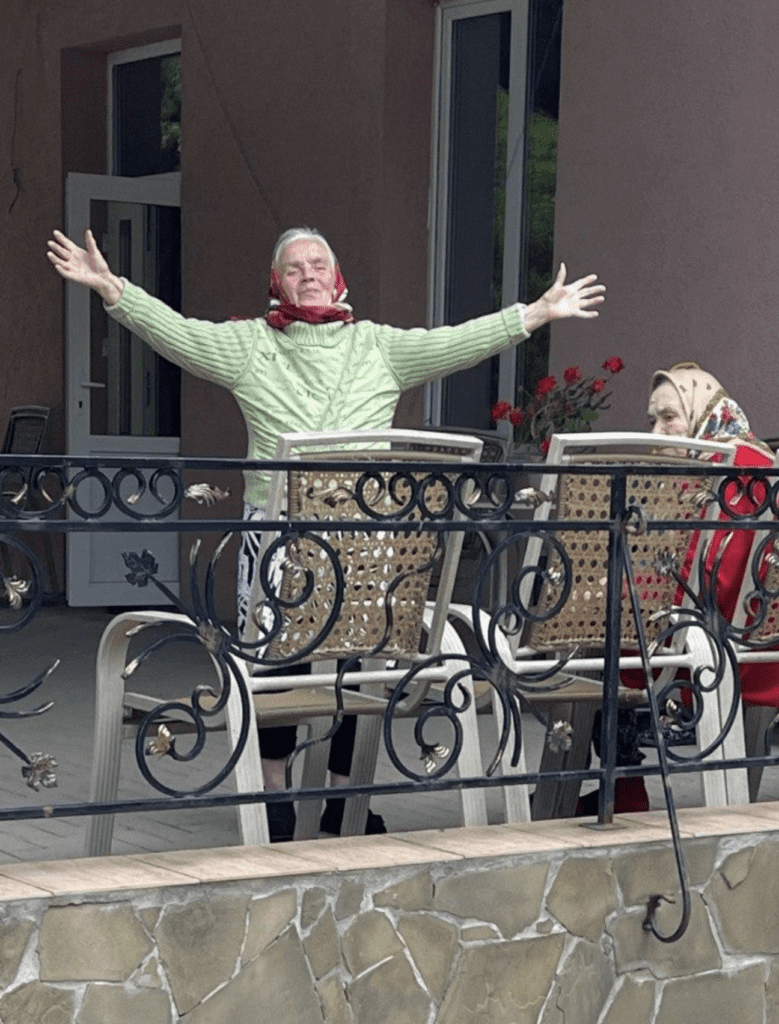
By Anastasia Poia-Cunningham, a Ukrainian freelance journalist
UKRAINE — Makiivka is a city in Ukraine’s Donetsk region, located less than 50 miles from the Russian border. It was among the first cities to fall under Russian occupation in 2014. That year, Russia established the self-proclaimed Donetsk and Luhansk “People’s Republics,” which were later declared part of Russia. Moscow maintains that status to this day.
On Makiivka’s central street, at 6 Klubna Street, a church with an attached outpatient clinic, built in 2004 with donations from American supporters, is still operating in the Russian-occupied city. The project began as Ukraine celebrated its second anniversary of independence in 1993, when a Ukrainian student reached out across the ocean for help and, unexpectedly, received a response.
The young man was inspired by the Lighthouse Radio Bible Study program, which he listened to on shortwave radio, and eventually decided to write to its hosts. At the time, he was a university student seeking support for a small ministry he had founded to help elderly and low-income people in his region.
“I knew very little about Ukraine at first. In fact, I had to stop myself from saying ‘the Ukraine’”, recalls one of the program’s hosts, Pastor Pat McCoy. Before becoming a minister at Ramah Church, he spent years ministering in Churches in Florida and Georgia, and it was after becoming pastor at Ramah that he found himself behind a radio microphone. Although he was born in Florida, he had already spent several decades serving in churches in Georgia and Florida by the early 1990s.
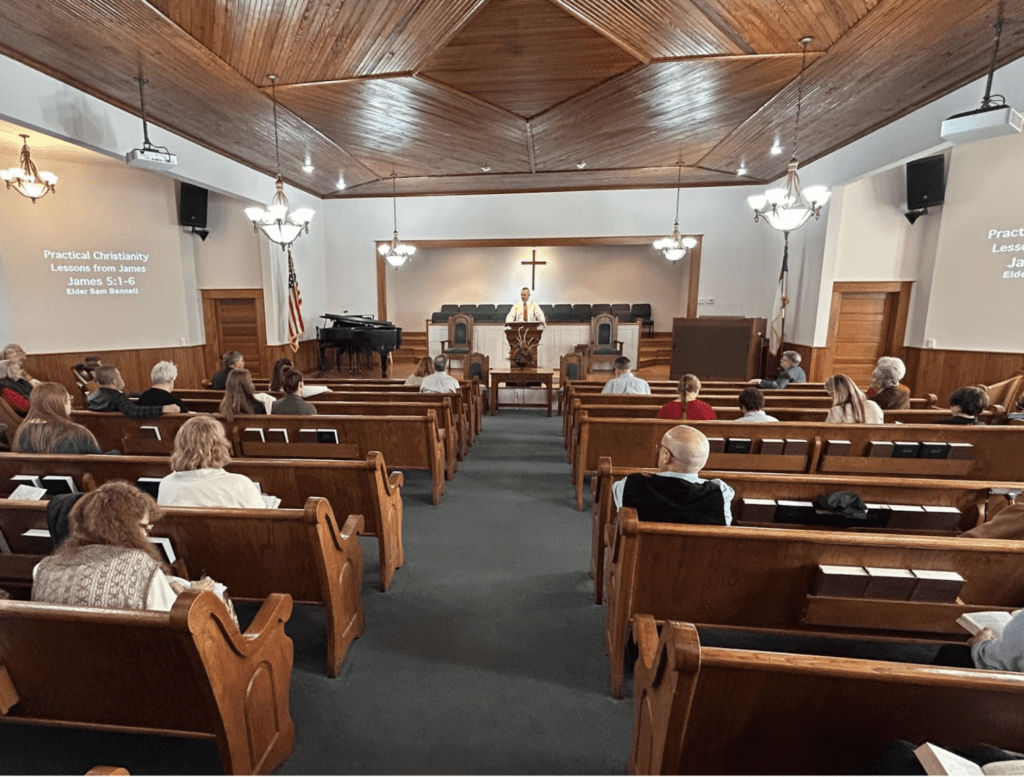
(Pictured: 2026. Ramah Primitive Baptist Church in Barnesville, led by Pastor Sam Bennett; its congregation carries out mission work in Ukraine)
The correspondence with a stranger on the other side of the ocean lasted for months, and in 1993, a group of 10 people traveled from Atlanta to Donetsk, a city most of them had never heard of and could not even look up at the time. Without the benefit of the internet, these hopeful volunteers were flying blind towards Donetsk.
The community’s first encounter with Ukraine was difficult to describe as a success. Unlit streets, gray buildings, and people walking with their heads down painted a bleak picture of this new world. The sad and confused faces of the locals offered little sense of hope to the small group of Americans.In a country that had spent 69 years under communist rule, the air still seemed heavy with the legacy of the Soviet Union.
“Soldiers with large guns and other military equipment were everywhere,” recalls Sherry Farr, the mission’s medical team leader. “I wanted to go and experience how the Lord could use me. In Ukraine, my role was to welcome people, check their blood pressure, and understand their needs. Almost everything was in short supply, from toothbrushes to reading glasses”, she says, and despite her initial shock, she kept returning to Ukraine for the next 10 years.
The experience in Ukraine surprised the group more than it scared them.
On their journey home, members of a Baptist church in Georgia, led by Pastor Pat McCoy, decided to commit to full-time ministry in Ukraine, specifically in Donetsk. They went on to establish a nonprofit charitable organization called Donetsk Ministries International.
Mission trips continued annually in Donetsk Region until 2014. The main goal was teaching the Gospel and mentoring pastors. Humanitarian aid was also provided to hose in need. This started out with items we could carry in our luggage, like tooth brushes, glasses, and clothes. Over the course of three decades, the mission’s assistance evolved into providing humanitarian aid to those affected by the Russian invasion. One thing, however, never changed: the righteous hearts of the Christians involved.
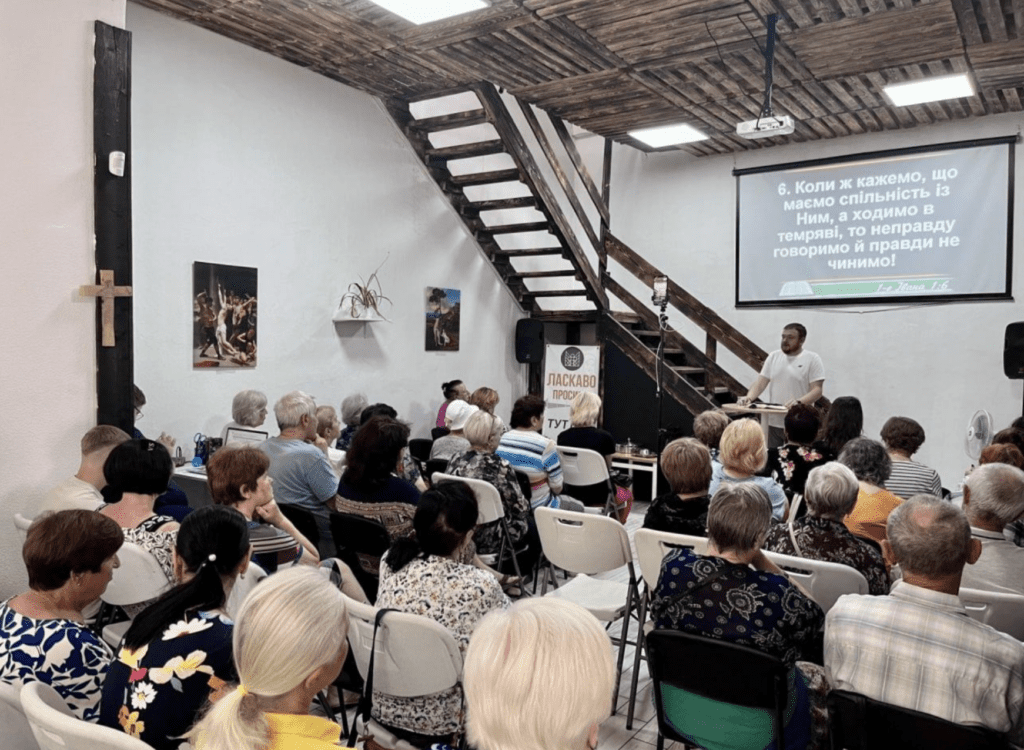
(Pictured: Pastor Eugene teaching congregation in the church)
After Russia’s occupation of the Donetsk region in 2014, the organization was renamed Discipling Ministries International (DMI). From that point on, DMI representatives continued to travel to Ukraine every year. Their trips often lasted several weeks and, until the start of Russia’s war in 2014, were not limited to eastern Ukraine, where Donetsk is located.
“We visited Mariupol (occupied by Russia since 2022 — ed.), Crimea (occupied since 2014 — ed.), Odesa in the south, and Ivano-Frankivsk in the west,” says Monta Rae Pursel, a former art teacher who joined the mission in 2002.
For a long time, she struggled to find her place in the mission, describing herself as “neither a pastor nor a doctor.” Eventually, however, she began working with orphans, establishing a Bible school for them.
“Some of the children had only one set of clothes for their entire lives, and when it was time to bathe, they were simply hosed down. Many had badly decayed teeth. There were private orphanages where children were cared for much better.
I remember especially meaningful moments when the children gave us gifts, even though they themselves had nothing,” she recalls. “One little girl took the only hair clip she owned out of her hair and gave it to one of my teammates.”
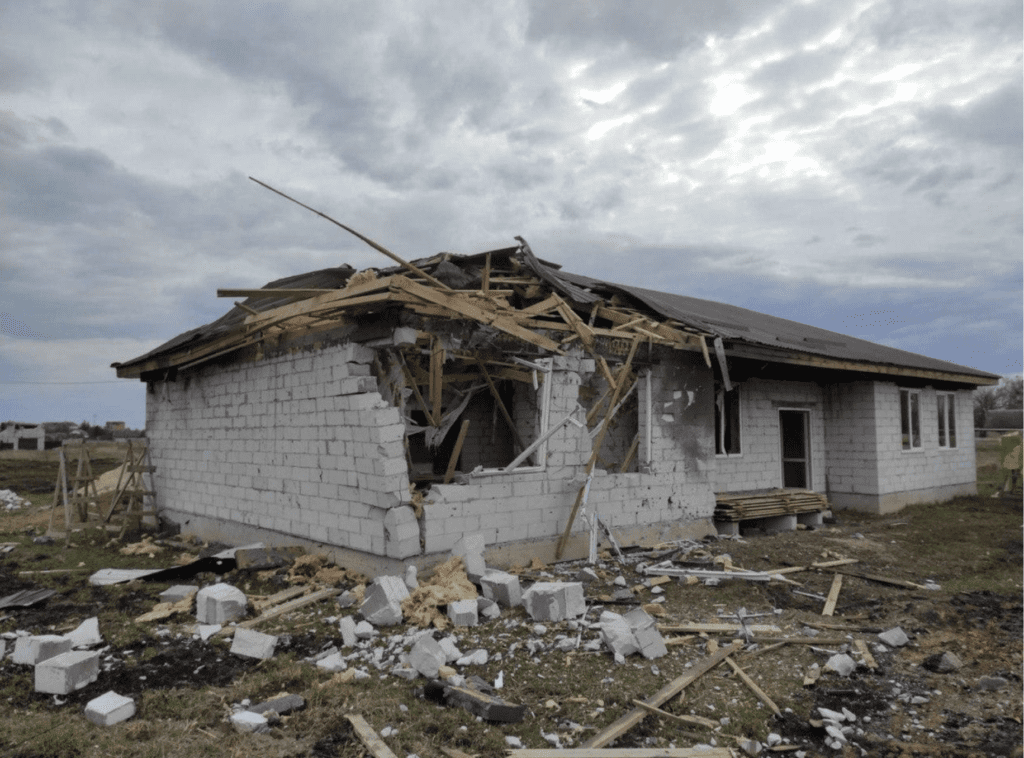
(Pictured: 2022. Missile hit a rehabilitation center for women. Building was being built by DMI)
Currently, in the territory controlled by Ukraine, the governing body oversees four communities led by Baptist pastors. DMI provides training and support to help these communities grow and become self-sustaining, while also covering urgent needs on a monthly basis.
In early 2026 generators became the most urgent need as Russia has been consistently targeting Ukraine’s energy infrastructure since October of 2025. These attacks leave residents of Ukraine’s largest cities without power for hours at a time, and on a daily basis. The timing of these attacks is no coincidence, Ukrainians rely on their home’s centralized heating systems to stay warm in the region’s harsh winter. Without power, millions across Ukraine are left with no way to keep the heat on as temperatures drop as low as -6° Celcius (or roughly 20° Farenheint).
The mission has routinely raised funds to help those in need in Ukraine, says another member of the mission Pastor Sam Bennet, by organizing charity dinners, community events, and other grassroots fundraising efforts. “We had a tradition of hosting charity barbecues. We would cook the meat all night on Friday and serve it on Saturday. Often, people don’t even know where Ukraine is, but they’re still willing to help.” For Pastor Bennet, traveling to Ukraine also meant seeing Europe for the first time.
After Russia’s full-scale invasion in 2022, DMI’s needs grew and expanded tosending aid to communities near the front lines of the war.
“At the beginning of the invasion, we carried out evacuations from the Kharkiv region, about 30 percent of which was occupied by Russian forces,” says Oleksandr, a Ukrainian member of DMI’s board. “After the territories were liberated in the summer of 2022, we delivered food and medicine to people who had remained there and lived under occupation.
Today, many villages located 15 to 30 miles from the front line are extremely dangerous, as Russian drones can reach them. That is why we also support Ukrainian forces who are working to stop those drones.”
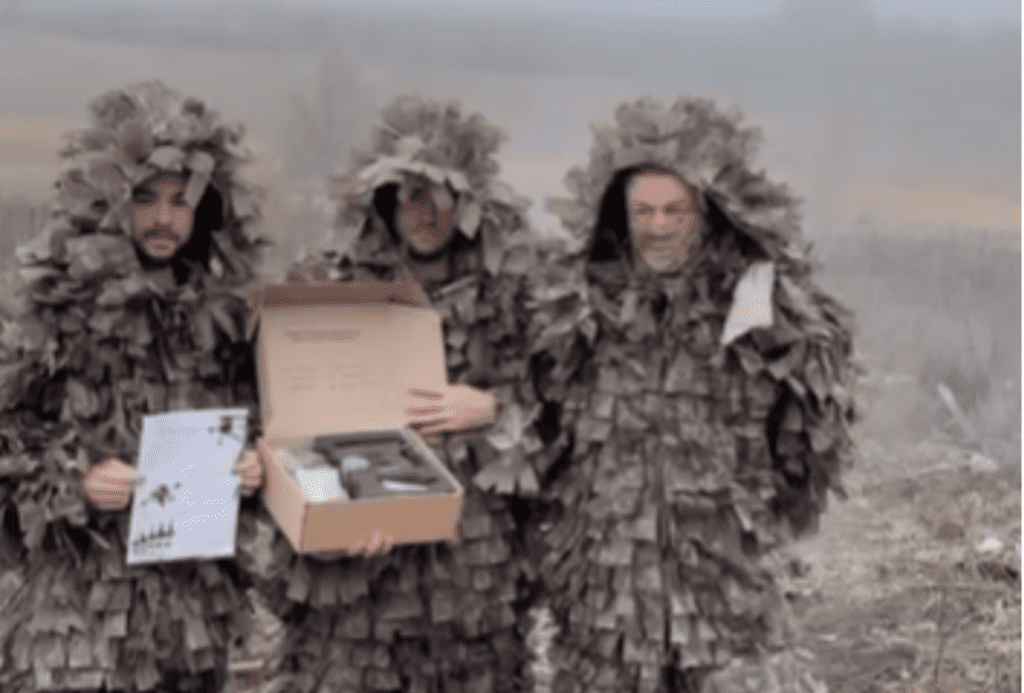
(Pictured: Soldiers of the Armed Forces of Ukraine thanking donors for a net gun — a device used to counter unmanned aerial vehicles and drones by neutralizing hostile targets with a deployed net)
The organization’s representatives were last in Ukraine in 2023, staying in Kyiv and the surrounding Kyiv region. During Russia’s full-scale invasion in late February 2022, Russian forces aimed to seize Kyiv. The city was never occupied, but Russian troops did take control of several villages in the northern and western parts of the Kyiv region.
The Ukrainian military liberated these areas in early April of that year.
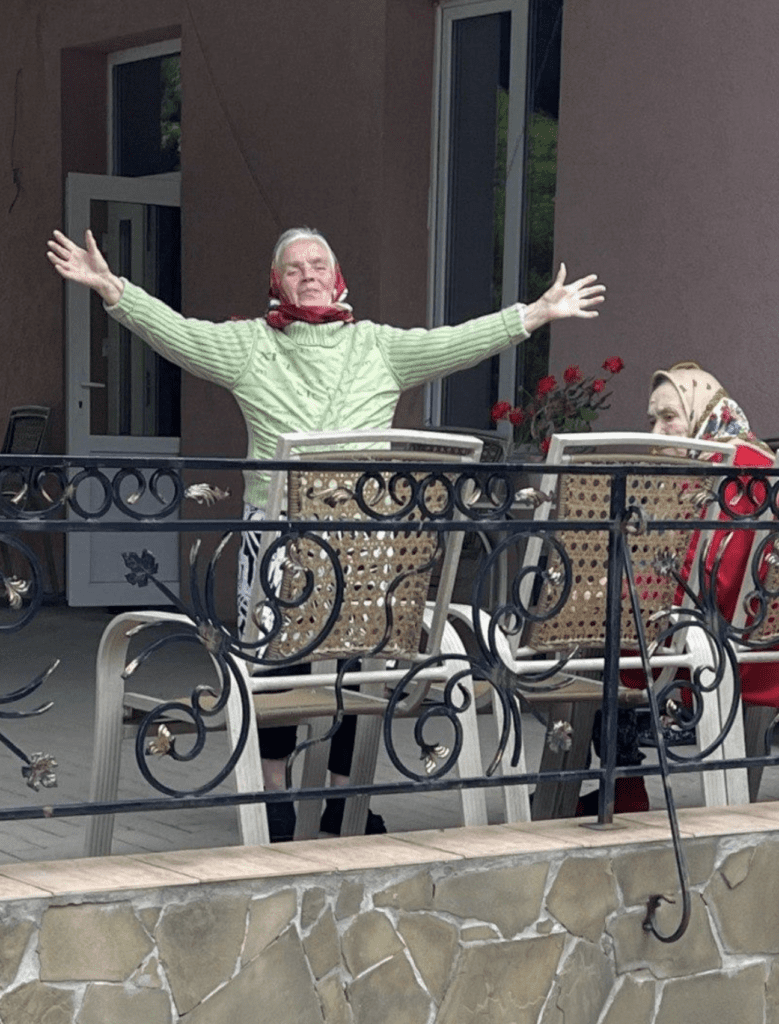
(Pictured: May 2022 mission trip. Displaced woman greeting us as we brought food and humanitarian aid to their village)
“In Bucha, a town in the Kyiv region that was under occupation, we spoke with a 90-year-old woman,” recalls Pastor Pat McCoy, who visited the area a year after the Russian forces withdrew. “She witnessed her friends being shot in the street simply for leaving their homes.
Russian soldiers later broke into her house, forced her to strip while they searched for weapons, then left, climbed into a tank, and destroyed her garage next to the house.”
This year, 80-year-old Pastor Pat McCoy plans to make his thirty-fifth and perhaps final visit to Ukraine. The trip is scheduled for the fall, and the community is now actively assembling a team and identifying key needs, which continue to grow with each passing day of the war.
“The people of Ukraine changed my life. In the United States, I worked as a hospital nurse, but after several years of traveling to Ukraine, I became a public health nurse because I wanted to do more for people in need,” says Sherry Farr.
Anastasia Poia-Cunningham is a Ukrainian freelance journalist