By Nathaniel Jordan
The Telegraph
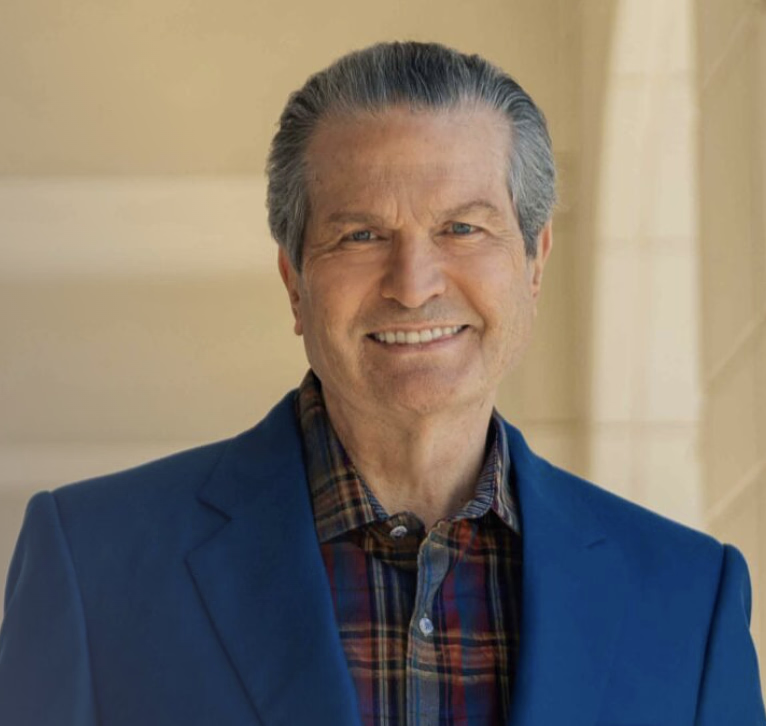
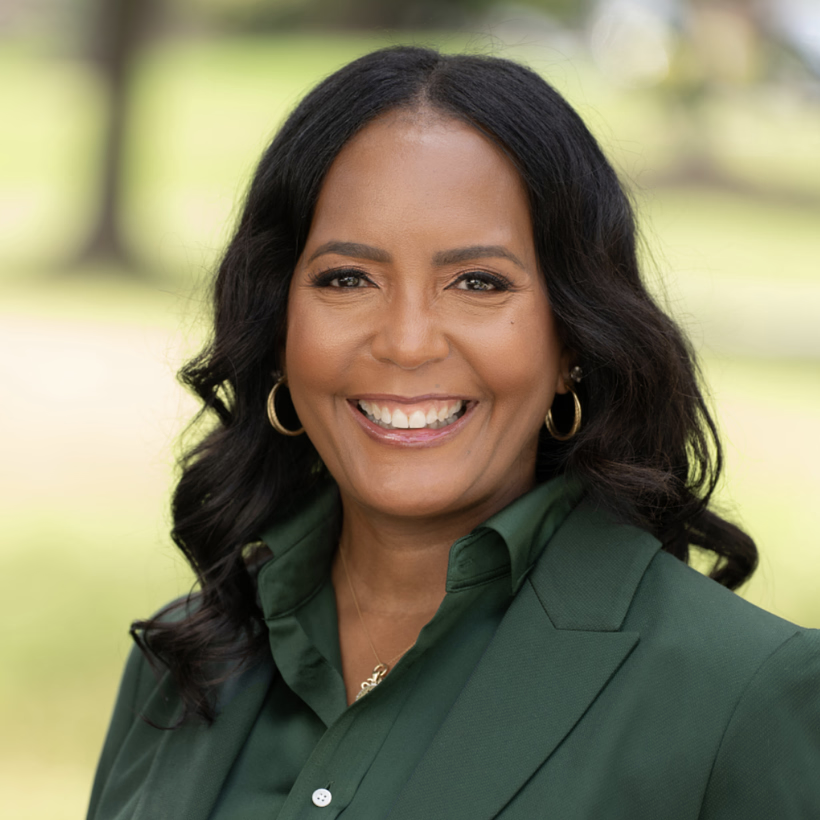
Georgia voters will elect their next governor in the Nov. 3 midterm. Former Atlanta Mayor Keisha Lance Bottoms (D) will run against Jackson Healthcare founder Rick Jackson (R). Former President Joe Biden endorsed Bottoms in May, while Jackson defeated Trump-backed Burt Jones in a narrow primary election.
The two candidates have feuded in recent months. Bottoms confronted Jackson outside an Atlanta hotel over campaign ads that targeted her husband, Home Depot executive Derek Bottoms. Bottoms has also advocated for multiple debates across the state, including in cities like Macon, Savannah and Columbus. Jackson previously pushed for a singular town hall debate.
The race has drawn national attention as well. Democrats came surprisingly close to winning the gubernatorial race in 2018, when Stacey Abrams lost by only 55,000 votes. While Bottoms was easily the most high-profile Democratic candidate in the primary, some in the party have doubts about her ability to defeat Jackson.
Bottoms gained some national notoriety as Atlanta’s mayor years ago, particularly when she spoke out as Atlanta protested following the death of George Floyd. She has faced criticism for her lackluster lone term in that position but is hoping to replicate — and improve upon — Abrams’ success to topple Jackson.
National politics loom large in the race, particularly after a heavyweight battle in the Republican primary between Jackson and former Lieutenant Governor Burt Jones, who dueled for support among Georgia’s Republican politicians as much as its red voter base.
Jackson repeatedly leaned on platforms about harsher immigration policy and anti-abortion laws, aligning with President Donald Trump in that race — he even said he would be Trump’s “favorite governor.” But Jackson has since released a policy agenda that mentions few of those talking points as he no longer contends with Jones.
Keisha L. Bottoms
Bottoms most recently served in the White House as the senior advisor for public engagement to Biden from 2022-2023. Prior to that, she was Atlanta’s mayor from 2018-2022, becoming the city’s first mayor to serve in all three branches of government. Through Bottoms’s tenure, Atlanta experienced a citywide cyberattack, the COVID-19 pandemic and major protests over police brutality and injustice.
“As mayor, I led Atlanta through difficult times, supported small businesses, raised pay for first responders, and expanded affordable housing,” Bottoms said in her May 2025 campaign launch. “I will be a governor for all Georgians.”
The former mayor rose to prominence in a 2020 speech addressing the death of George Floyd and the resulting protests. Bottoms took a stance against police brutality while drawing a line at violent protests that occurred across the country. Soon after, Bottoms was among a list of names that could run as Biden’s Vice President, though his campaign eventually ran with Kamala Harris in August 2020.
Bottoms’s campaign has faced two separate state ethics violations, which called for a $37,000 fine in 2017 and $36,000 in 2021. The violations stem from issues with campaign paperwork and donations that exceeded state limits. In late August, Bottoms unveiled an ethics policy that would limit Georgia politicians’ ability to personally profit from their positions.
Top issues and initiatives:
- Lowering healthcare costs and expanding Medicaid
- Decreasing the cost of living and expanding government assistance
- Encouraging government transparency
- Modernizing state education with an emphasis on financial literacy
- Helping local farmers reach larger markets
- Supporting small business owners
- Increasing law enforcement resources and expanding crime-prevention programs
- Increasing education spending
Rick Jackson
Jackson first entered the political world in the 2010s, when he donated millions of dollars to the Republican National Committee. Jackson’s early ventures largely focused around privatizing Georgia’s foster care system, inspired by his own childhood experience as a foster child in Atlanta.
“Foster parents are true heroes, but most of them don’t have a checkbook big enough to buy influence,” Jackson wrote in a March 2026 Instagram post. “Those are the Georgians I’m fighting for.”
Now a billionaire healthcare executive, Jackson has funnelled more than $100 million into his campaign since it launched in February. His resumé spans across nearly 40 years in the healthcare industry. His most notable venture is the founding of Jackson Healthcare in 2000, which is now valued at more than $3 billion. Jackson’s campaign portrays him as a political outsider, echoing Trump’s 2016 presidential run.
Jackson came under scrutiny in June after Jackson Healthcare subsidiary Avant Healthcare Professionals settled a lawsuit that alleged the company underdelivered on promises to provide better housing and salaries to more than 5,000 immigrant employees. In the suit, plaintiffs claimed that Avant threatened to report employees to U.S. Immigration and Customs Enforcement if they resigned. Avant agreed to pay $3 million days after Jackson received the Republican nomination. Left-wing activists have questioned Jackson’s anti-immigration stance, as he owns companies reliant on migrant workers.
Top issues and initiatives:
- Lowering private healthcare costs and lowering reliance on Medicaid
- Cutting property, sales and income taxes
- Creating local jobs
- Increasing protections for children across the state
- Increasing support for local law enforcement agencies
- Immigration enforcement against criminal illegal immigrants
- Prohibiting DEI policies